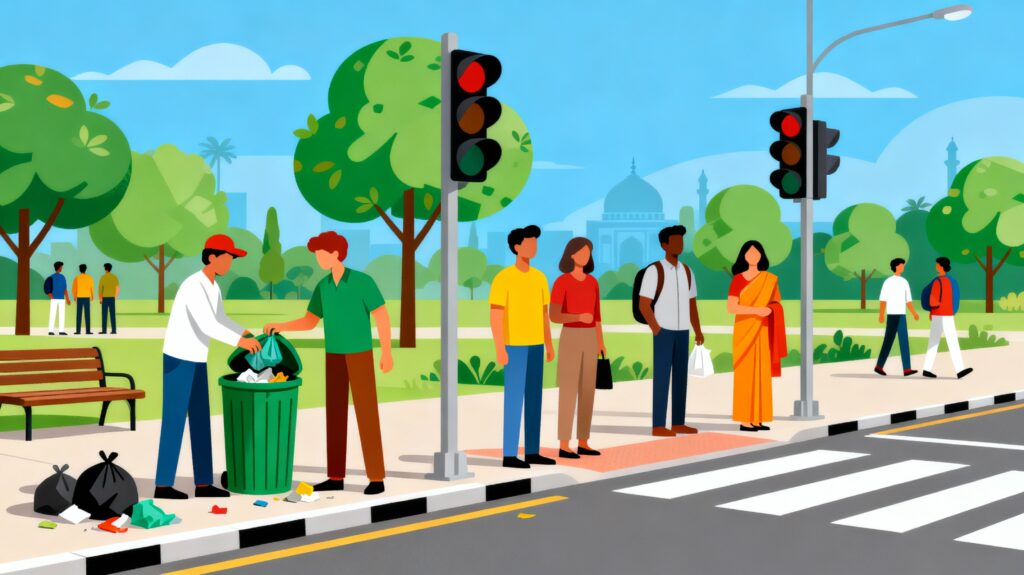
Civic sense means
Is basically how we behave in public – It means:
Not throwing garbage on the road,
Not spitting everywhere,
Following traffic rules,
Respecting public spaces,
And basically not acting like the world is your personal dustbin.
In India, people talk a lot about “civic sense,” but honestly, half of us forget it the moment we step outside.
And that’s the whole problem – we want clean cities, but we act the opposite.
Why Civic Sense Matters: Social, Health & Economic Impact
Think of civic sense like Wi-Fi. If even a few people misuse it, everyone suffers.
Health issues: Litter → mosquitoes → dengue. Simple maths.
Traffic chaos: No one follows signals → jams → frustration → fights.
Money loss: Govt spends crores cleaning garbage people throw in 5 seconds.
Bad image: Tourists see dirty streets → “Oh India is like this?” → Not great.
So yeah, it’s not just “nice to have.” It affects daily life big time.
Common Signs of Poor Civic Sense in India
You already know these — we see them every day:
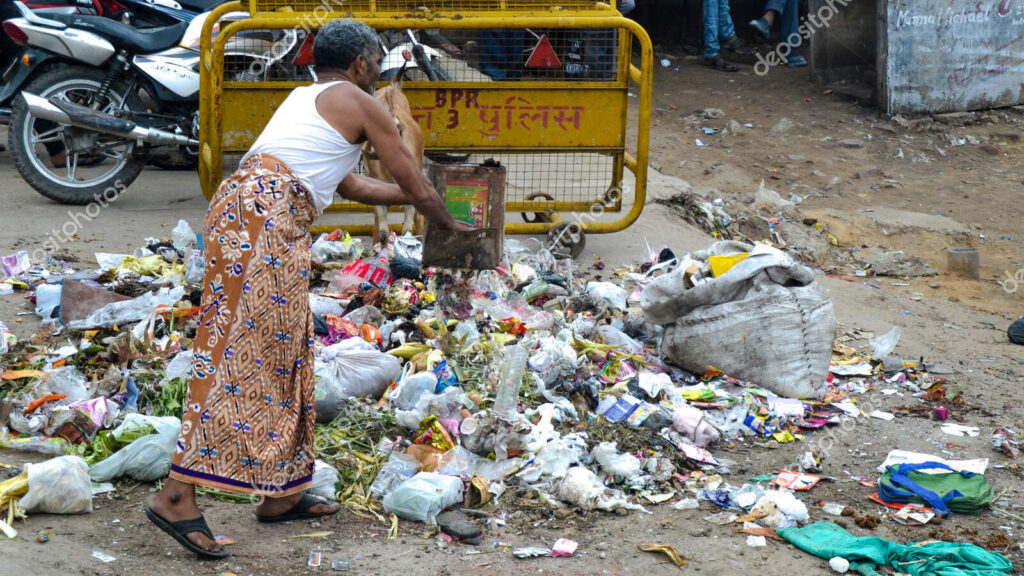
Littering like it’s a sport
Spitting paan everywhere
Honking non-stop, even when the signal is red
Parking anywhere we want
Breaking queues (Indian superpower lol)
Throwing festivals/parties on roads because why not
Dogs, pigs, and people fighting for the same garbage pile
Public buses treated like stunt vehicles
If you nodded on more than three points, you know why our civic sense report card is weak.
Why Civic Sense Remains Weak: Root Causes
Let’s be honest – it’s not just “Indians are like this.” There’s more behind it.
1. No real civic education
School teaches trigonometry, but not how to use a dustbin.
Which one do you use daily? Exactly.
2. Weak enforcement
Breaking rules in India is easy because nothing major happens when you break them.
Low fear → low discipline.
3. Poor infrastructure
No dustbins → people throw on roads.
No good footpaths → people walk on roads.
It’s a loop.
4. Cultural habits
“Sab karte hain, main bhi kar leta hoon”
This one line kills civic sense faster than pollution.
5. Population pressure
High population = high density = chaos.
Data Check: What Surveys Reveal About Civic Behaviour in India
Surveys like the India Today GDB report show one thing very clearly:
Most Indians know what good civic sense is.
But only a small percentage actually follow it.
Traffic, cleanliness, and public hygiene get the worst ratings.
City-wise rankings show huge gaps – some cities behave much better than others.
So yeah… we understand, but we don’t apply.
Cities and Communities Doing It Right: Examples & Success Stories
Some places show that improving civic sense IS possible:
Indore – cleanest city for years, because people follow rules and the system works.
Mysuru – strong waste segregation culture.
Kerala – public hygiene awareness is way higher.
Gangtok – no litter zones actually enforced.
These cities aren’t magic. They just have better habits + better systems.
How Ordinary Citizens Can Improve Civic Sense: Practical Steps
You don’t need to be a superhero. Just basic stuff:
Throw your waste in bins, not roads
Don’t spit, even if you think “one time doesn’t matter”
Use zebra crossings
Don’t honk like you’re calling a lost friend
Keep your street clean, not just your home
Stop people politely when they do nonsense
Follow queues like a civilized human
Teach kids early – they copy adults
Civic sense is contagious – good or bad. Your choice.
Challenges & Criticisms: Why It’s Not Just About “Bad Citizens”
Let’s be fair – blaming citizens alone is lazy.
If there are no dustbins, people will litter.
If public toilets are unusable, people will pee outside.
If roads are confusing, people break rules.
If public transport sucks, traffic increases.
If enforcement is weak, bad habits spread.
So yes, individuals matter – but the system matters just as much.
Civic Sense in India vs Other Countries: What We Can Learn
Countries like Japan, Singapore, Germany are cleaner not because their people are “better,” but because:
Rules are strict
Fines are real
Systems actually work
People are taught civic habits from childhood
Peer pressure encourages good behaviour
India can reach there too – but we need both:
better habits + better systems.
FAQs: Civic Sense India & What It Really Means
Good behaviour in public. That’s it.
Mix of habits, weak enforcement, poor infrastructure, and social “chalta hai” attitude.
Yes. Start in school and reinforce daily at home.
Yes - when rules bite, behaviour changes fast.
Indore, Mysuru, Gangtok, parts of Kerala, Chandigarh.
Follow basic rules, don’t litter, respect public spaces, teach kids, and stop people when you see bad behaviour.