
Aravali Hills : What Are the Aravali Hills and Why They Matter
One of the world’s oldest mountain ranges is the Aravali Hills. The Himalayas are not even as old as them. Although most people are unaware of them, these hills, which are found throughout western India, silently perform a crucial function: they safeguard the environment.
The Aravali hills function as an organic barrier. They help replenish groundwater, prevent the spread of deserts, and lessen pollution, particularly in urban areas like Delhi. Therefore, it’s not drama when people discuss saving the Aravali Hills; rather, it’s about safeguarding essential life support systems.
Aravali Hills Location & Extent Across India
The Aravali hills start from Gujarat, pass through Rajasthan, continue into Haryana, and reach Delhi.
Total length: around 800 km
Major states covered: Gujarat, Rajasthan, Haryana, Delhi
Famous places: Mount Abu, Udaipur, Alwar, Faridabad
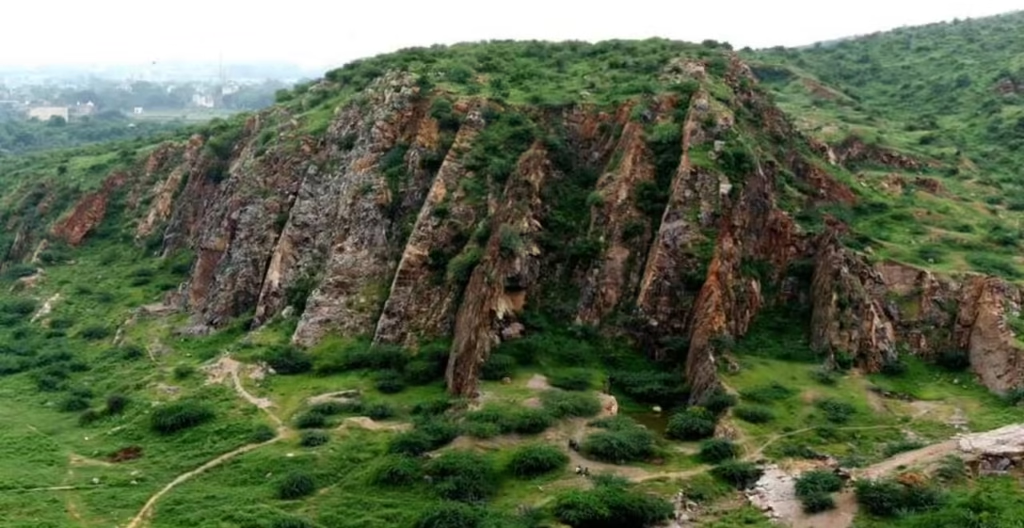
Even though they look small and broken today, these hills once stood tall like major mountain ranges.
Geological History of the Aravali Hills
Here’s the crazy part: the Aravali hills are about 1.5 to 2.5 billion years old. That’s before dinosaurs even existed.
Over time, wind, rain, and human activity slowly wore them down. That’s why they don’t look tall and sharp like the Himalayas. But age doesn’t mean useless. In fact, their old rocks are great at storing groundwater.
Supreme Court Ruling on Aravali Hills Definition
Recently, the Supreme Court made a ruling that changed how Aravali hills are officially defined. According to the new interpretation, only areas with clear hill structures may be counted as Aravali hills.
This created panic because:
Many forest areas may lose legal protection
Mining and construction could increase
Environmental damage could become legal
That’s when the Save Aravali campaign picked up speed.
What the New Definition Means for Aravali Hills
In simple words, the new definition may:
Remove protection from flat or degraded Aravali areas
Allow mining, construction, and deforestation
Make it harder to stop environmental damage in court
Environmental activists say this definition ignores the ecological role of the hills, not just their shape.
Environmental Importance of Aravali Hills
The Aravali hills are environmental superheroes working silently.
They help by:
Stopping the Thar Desert from spreading east
Improving air quality in Delhi-NCR
Recharging groundwater
Supporting wildlife and forests
Controlling floods and soil erosion
Destroying them would make heatwaves worse and water shortages more common.
Risks from Mining & Loss of Protection
Illegal mining is already a big problem in Aravali regions.
If protections weaken:
Hills will be flattened
Forests will disappear
Dust pollution will increase
Nearby cities will suffer more heat and pollution
Once these hills are gone, they can’t be rebuilt. Nature doesn’t offer refunds.
Save Aravali Campaign: Public and Political Response
After the court decision, citizens, activists, and environmental groups launched the Save Aravali campaign.
The goal is simple:
Spread awareness
Pressure authorities
Demand stronger environmental protection laws
Social media, protests, art, and public discussions are being used to make noise: because silence is what destroys nature fastest.
Unique Awareness Efforts: Sand Art in Pushkar
In Pushkar, Rajasthan, sand artist Ajay Rawat created powerful sand art to support the Save Aravali movement.
Why sand art?
Because sand reminds us of desertification – exactly what will happen if Aravali hills vanish.
It’s a smart way to make people stop scrolling and start thinking.
Local Voices: Residents, Experts & Activists
People living near the Aravali hills say:
Water levels are already dropping
Forest cover is shrinking
Summers are getting harsher
Environmental experts warn that ignoring Aravali protection will directly hurt future generations, not politicians sitting in air-conditioned rooms.
Regional Impacts: NCR, Haryana, Gujarat & Rajasthan
The impact isn’t limited to one state.
Delhi-NCR: Worse air pollution and heatwaves
Haryana: Falling groundwater levels
Rajasthan: Faster desert expansion
Gujarat: Loss of forest biodiversity
So yes, Aravali hills affect millions of people, not just environmental activists.
Legal Background: Environmental Laws & Policy Timeline
Earlier court orders clearly banned mining in Aravali areas. Over time, loopholes and weak enforcement reduced their impact.
Now activists want:
Clear legal definitions
Stronger enforcement
Zero tolerance for illegal mining
Without laws, campaigns are just noise.