
Bangladesh Crisis Explained: What’s Causing the Escalation?
Bangladesh is currently experiencing a severe political and social crisis. The term “Bangladesh crisis” refers to the combination of protests, violence, street rage, and tension with India.
This was not an overnight crisis. It is the outcome of student movements, public outrage, political disputes, and anxiety about the future of the nation. Indeed, the issue affects not only Bangladesh but also India and the entire region.
Without making things more complicated, let’s dissect it step by step.
What Is the Bangladesh Crisis? (In Simple Terms)
The Bangladesh crisis is about people vs power.
Many citizens are angry at the government and political system. They believe:
Leaders are not listening
Elections are unfair
Jobs and education opportunities are shrinking
Corruption is everywhere
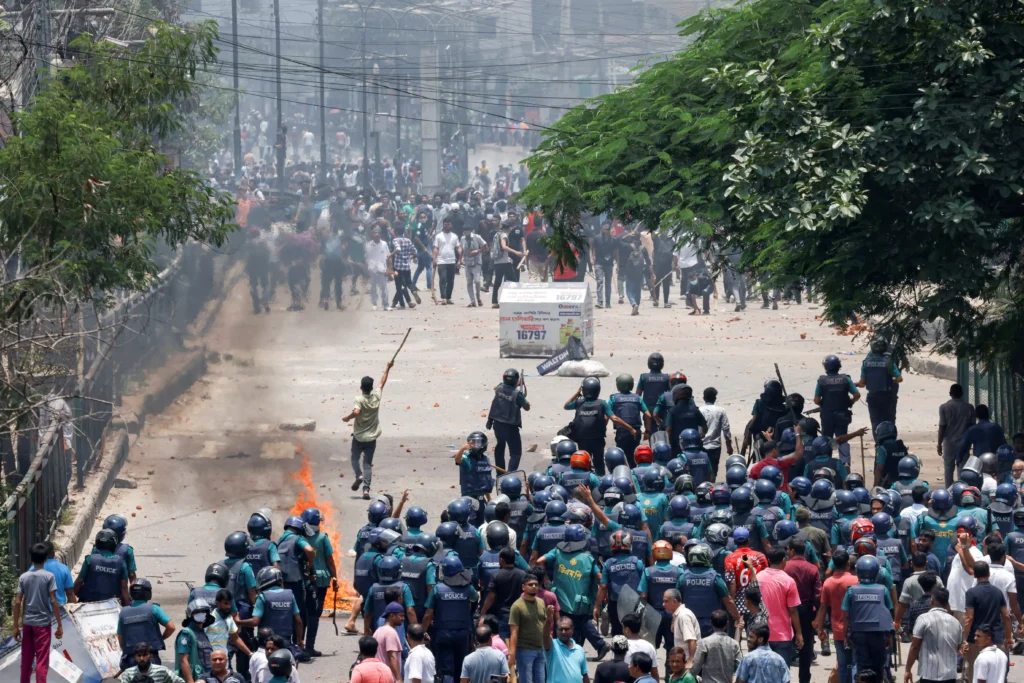
This frustration exploded into mass protests, especially led by students and young people. Once protests turn violent, things spiral fast – and that’s exactly what happened.
Timeline: How the Bangladesh Crisis Grew
Here’s a simple timeline so you don’t get lost:
Early 2024: Students start protesting against the government
Mid-2024: Protests spread across cities, police action increases
Late 2024: Political instability grows, leadership questioned
2025: Violence increases, minorities targeted, anti-India slogans heard
Each event added fuel to the fire instead of calming things down.
Student Protests: The Spark of the Bangladesh Crisis
Students were the first to openly challenge the system.
They protested about:
Unemployment
Poor education policies
Lack of future opportunities
Political favoritism
When students come out in large numbers, it’s a big warning sign for any government. Instead of fixing the issues early, the situation was mishandled – and anger only grew.
Death of a Student Leader and Nationwide Anger
Things got much worse after the death of a student leader during protests.
Many people believed:
He was targeted unfairly
The system failed to protect young voices
Justice would never be served
This incident pushed protests from “peaceful” to violent and emotional. Roads were blocked, buildings were attacked, and clashes became common.
Anti-India Protests During the Bangladesh Crisis
Now here’s where things get sensitive.
During protests, anti-India slogans started appearing. Some protest groups blamed India for:
Supporting certain political leaders
Interfering in Bangladesh’s politics
Ignoring human rights issues
Whether these claims are fully true or not, perception matters. These protests damaged public trust between the two countries.
Islamist Groups and Security Concerns
Some leaders have warned that Islamist extremist groups could take advantage of the chaos.
Here’s the logic:
Political instability = weak control
Weak control = space for extremist groups
Extremists can recruit angry, unemployed youth
This is why the Bangladesh crisis is also seen as a security issue, not just a political one – especially for India, which shares a long border.
Impact on Hindu and Minority Communities
This is one of the darkest parts of the Bangladesh crisis.
There have been reports of:
Attacks on Hindu homes
Religious violence
Lynching incidents
Fear among minority families
When law and order breaks down, minorities often suffer first. This has raised serious human rights concerns both inside and outside Bangladesh.
Government Response to the Bangladesh Crisis
The government says it is:
Trying to control violence
Maintaining law and order
Protecting national unity
But many citizens don’t trust these statements anymore. The gap between what leaders say and what people experience on the ground is huge – and that’s dangerous.
Bangladesh Crisis and Upcoming Elections
Elections are supposed to fix problems. But during a crisis, elections become risky.
People are worried about:
Fair voting
Safety during elections
Whether opposition voices will be silenced
If elections are seen as unfair, the crisis could deepen instead of ending.
Why the Bangladesh Crisis Matters to India
This isn’t just Bangladesh’s internal issue.
India is worried about:
Border security
Refugees crossing borders
Extremist movements spreading
Trade and regional stability
When a neighboring country is unstable, the impact doesn’t stop at the border.
What Experts Are Saying About the Bangladesh Crisis
Most experts agree on one thing:
Ignoring public anger makes things worse.
They believe:
Dialogue is needed, not force
Students must be heard
Minorities must be protected
Political reforms are unavoidable
Without real changes, protests will keep coming back.