Air Pollution in Delhi, India – Current Overview & Trends
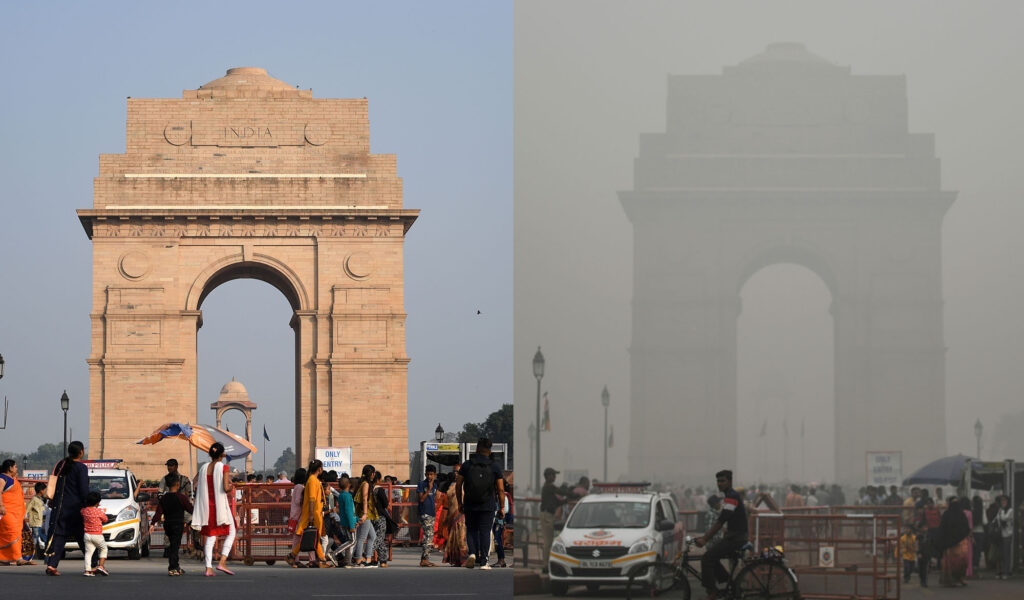
Let’s face it: Delhi has some of the worst air pollution in the world, particularly in the winter. On certain days, you can actually “see” the air, which is filthy rather than poetic. The Air Quality Index (AQI) frequently abruptly changes from “Unhealthy” to “Hazardous.”
Put simply: You are inhaling substances that your lungs detest.
The primary problem? PM2.5 and PM10 are fine particles. They don’t care if you’re young, healthy, or fit; they are small and enter your lungs directly. The pollution issue in Delhi is not new; it has been growing for years and gets worse every winter.
What is AQI & Why It Matters for Delhi
Think of AQI like a report card for the air. But here, the grade is almost always bad.
Quick breakdown:
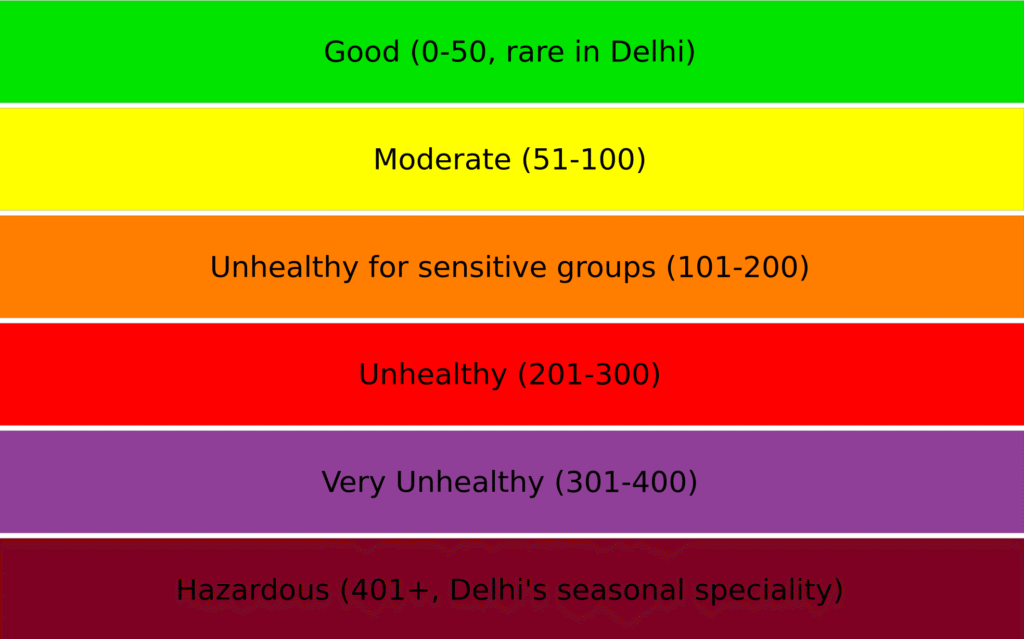
AQI is important because it tells you when the air can literally make you cough, give headaches, trigger asthma, or just make you feel tired for “no reason.”
Key Pollutants in Delhi: PM2.5, PM10, NO₂, SO₂, O₃, CO
Let’s keep this simple and real:
PM2.5 → So tiny it goes deep in your lungs. Delhi’s biggest villain.
PM10 → Bigger dust particles. Roads + construction = nonstop supply.
NO₂ → Mainly from vehicles. Traffic jams = human gas chambers.
SO₂ → From burning dirty fuel.
Ozone (O₃) → Not the good ozone. This one irritates your lungs.
CO (Carbon Monoxide) → Colourless, dangerous, comes from incomplete burning.
If Delhi’s air was a recipe, this would be the ingredient list – and not one of them is good for you.
Real-Time & Recent Air Quality in Delhi (Latest Data)
Delhi’s AQI jumps like a mood swing.
Morning? Unhealthy.
Evening? Very Unhealthy.
Winter? Basically “Don’t go outside unless you have to.”
Rainy days? Suddenly cleaner (because rain literally washes the filth down).
Real-time numbers change daily, but the vibe stays the same: the air is consistently worse than what experts say is “safe.”
Year-on-Year Trend: How Pollution Has Evolved in Delhi (1990s–2025)
Here’s the not-so-fun truth:
In the 1990s, pollution was bad but somewhat manageable.
In the 2000s, vehicles exploded in number: air got worse.
After 2010, construction, stubble burning, and population growth pushed things over the edge.
By 2020+, Delhi started topping global charts – for all the wrong reasons.
There are small improvements here and there, but honestly, the long-term trend is still worrying.
Seasonal Variation & Smog Season
Every winter, why does Delhi suddenly choke?
Due to:
- Pollutants are trapped near the ground by cold air.
- Crop stubble burning in Punjab and Haryana
- Low wind causes pollution to remain trapped.
- More automobiles during the holiday season
- Firecrackers (regardless of how frequently the prohibition is reiterated)
In essence, Delhi becomes a massive pollution bowl during the winter.
Major Sources & Drivers of Pollution in Delhi
Let’s call out the real culprits:
Vehicles (way too many, many too old)
Construction dust (nonstop and barely regulated)
Industries around Delhi
Waste burning
Stubble burning (huge seasonal contributor)
Diesel generators
Road dust (bad roads = dust storms all year)
There’s no single villain – it’s a full team effort.
Hidden & Overlooked Pollutants: PM1 & Heavy Metals
Everyone talks about PM2.5, but PM1 is even smaller and more dangerous – and barely monitored.
Also present:
- arsenic
- lead
nickel
chromium
Breathing these daily is like taking slow, invisible damage.
Health Impacts of Delhi’s Air Pollution
Let’s be blunt:
Air pollution doesn’t care about your age – it affects everyone.
Short-term problems:
cough
burning eyes
headaches
throat irritation
difficulty breathing
Long-term problems:
heart disease
asthma
lung damage
weakened immunity
even cancer
Doctors see a spike in patients every year during smog season – not because people suddenly get weak, but because the air gets deadly.
Vulnerable Groups: Who Is Most at Risk
- Kids (small lungs + outdoor activities)
Elderly
People with asthma or allergies
Pregnant women
Anyone who spends long hours outdoors (delivery workers, vendors, traffic police)
But honestly, in Delhi, no one is truly safe.
What the Government & Authorities Are Doing
There are efforts:
Odd-even scheme
Smog towers (mostly symbolic — don’t clean entire city air)
Bans on crackers (not consistently followed)
Shutting down construction temporarily
Shutting schools during severe smog
Switching buses to CNG
Plans for electric vehicles
But the problem is massive, and results are slow.
What Residents Can Do (Practical Tips)
Real talk: you can’t “fix” Delhi’s air alone, but you can protect yourself.
Wear an N95 mask on high-AQI days
Keep windows closed when AQI is bad
Use an air purifier at home if possible
Avoid morning jogs when pollution peaks
Drink enough water to clear your throat + lungs
Monitor AQI daily
Small steps, but better than doing nothing.
Gaps & Challenges
Biggest issues no one wants to admit:
Poor enforcement of rules
Too many vehicles
People ignoring bans
Too many pollution sources to control at once
Political blame games
Weak monitoring in several areas
Everyone knows the problem; few take responsibility.
Future Outlook: Can Delhi’s Air Quality Improve?
short answer: Sure, but not right away.
Long answer: Delhi will continue to be at the top of the list of “most polluted cities” in the world unless there are stringent regulations, fewer cars, cleaner industries, improved waste management, and strong enforcement.