Why the River Keeps Getting Dirty Again and Again
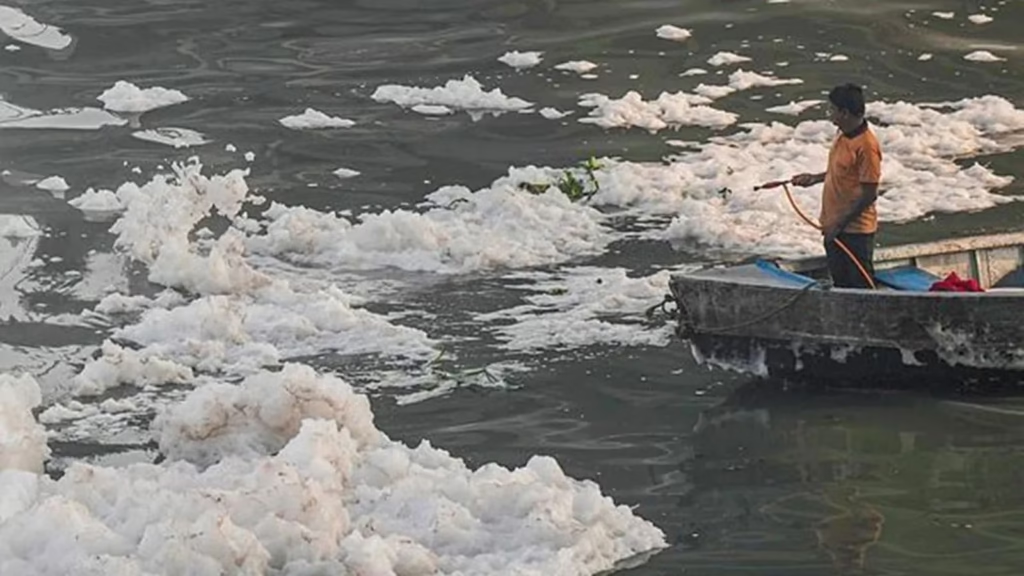
Let’s be real : the Yamuna is in bad shape. Every year, you see the same photos: white foam like shaving cream, black water, and people still trying to pray or bathe in it. And every year, government officials say, “We’re working on it.”
So what’s going on? Why does the river stay polluted even after so many “clean-up” drives?
Let’s break it down in a simple, no-nonsense way.
What’s Causing the Foam on the Yamuna?
You’ve probably seen those viral pictures of people standing in thick white foam during Chhath Puja. No, it’s not soap from someone washing clothes. It’s basically toxic bubbles caused by:
1. Industrial Waste
Factories dump chemicals directly into drains that flow into the Yamuna. These chemicals create foam when water hits turbulence.
2. Untreated Sewage
About 70-80% of Delhi’s sewage goes into the Yamuna without proper cleaning. Imagine flushing your toilet… and the river directly gets it. Yeah, that bad.
3. Major Dirty Drains
The worst ones:
Najafgarh Drain
Shahdara Drain
Barapullah Drain
These three alone pollute the river more than everything else combined.
4. The Okhla Barrage Effect
5. Low Water Flow
The river barely has fresh water left. When there’s not enough clean water, pollutants stay concentrated.
How Bad Is the Yamuna ’s Water Quality? (Quick Reality Check)
Here’s the honest truth:
The Yamuna in Delhi is basically dead water.
Water quality parameters:
| Indicator | Safe Level | Yamuna in Delhi |
|---|---|---|
| BOD (Biological Oxygen Demand) | < 3 mg/l | 30–90 mg/l (insane) |
| Dissolved Oxygen (DO) | > 5 mg/l | 0 mg/l in most stretches |
| Faecal Coliform | < 500 | 50,000+ (yes, that high) |
The river scored a solid ZERO.
Why Past “Clean-Up” Efforts Failed
Politicians have been giving speeches about “cleaning the Yamuna” since before you were born. But nothing changes. Here’s why:
1. Huge Amounts of Sewage Not Connected to Sewers
Many colonies still use septic tanks or dump wastewater into open drains. You can’t clean the river if the city’s sewage system itself is broken.
2. STPs (Sewage Treatment Plants) Not Working Properly
Some are overloaded.
Some treat only partially.
Some don’t work at all.
3. Too Many Authorities, Zero Coordination
Different agencies handle drains, sewage, water supply, industries, riverfront…
Basically, too many cooks spoiling the broth.
4. Illegal Dumping + Weak Enforcement
Industries dump waste at night when nobody’s watching. Fines are low, monitoring is weak, and corruption is a thing – you know the rest.
5. The River Has Very Little Water
Upstream states divert most of the fresh water. Without real water, no river can clean itself.
How Yamuna Pollution Affects Us
1. Health Risks
Skin infections
Stomach diseases
Waterborne illnesses
Even touching the water is unhealthy.
2. Dead Fish, Dead Ecosystems
Low oxygen = fish die
Pollution = plants die
Biodiversity = gone
3. Cultural Problems
People still perform religious rituals in this water. That’s dangerous, no matter how emotionally connected we are.
What Is the Government Doing?
Talking points:
New STPs are being built
Old STPs being upgraded
Drain diversion projects
Yamuna Action Plan (going on since the 1990s)
But the results?
Still not visible.
Why?
Because sewage connections, enforcement, water flow, drains : all must be fixed together. Not in bits and pieces.
What Actually Needs to Happen Now
Here’s the action plan that would actually fix the river (if someone did it seriously):
- Connect every home to a proper sewer line
- Fix every STP and increase capacity
- Stop industries from dumping waste into drains
- Release more clean water into the Yamuna
- Install real-time pollution monitoring (visible to public)
- Strict fines and jail terms for violators
- Regular cleaning, not once-in-a-year drama
If these things happen, the river can recover.