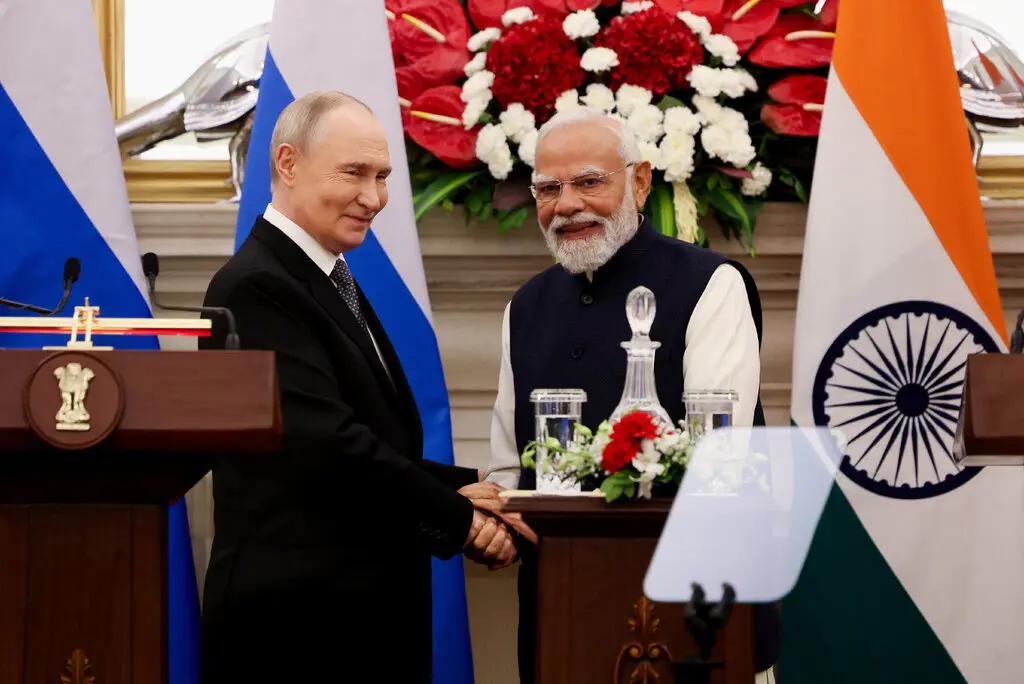
Putin visited India , but it wasn’t merely a “photo-op” or a chance diplomatic visit.
Both nations are attempting to safeguard their long-term interests in trade, energy, defense, and international politics, which makes this visit significant.
Imagine it as two long-time friends getting together to resolve significant problems, strike new agreements, and show the world that they still have faith in one another rather than for gossip.
India desires more trade options, stable defense supplies, and less expensive oil.
Russia wants more business, a reliable Asian ally, and a powerful partner outside the West.
Why Putin India Visit Matters: Geopolitical & Strategic Context
Let’s not act as though there is currently peace in the world.
The conflict in Ukraine, the rivalry between the US and China, sanctions, and oil politics are all messy.
Here’s why the visit actually matters:
India doesn’t want to depend on only one side (neither West nor Russia).
Russia needs reliable partners because of sanctions.
India wants cheaper oil (who doesn’t?).
Both countries need to show the world they still work together.
Basically, both sides came into this visit with real problems – and they tried to solve them without making a big drama about it.
Key Outcomes: Economic and Trade Deals from Putin ’s India Visit
Let’s keep things straightforward.
Did they sign contracts?
Indeed.
Were they transformative?
Not precisely, but they are significant.
Big takeaways:
They discussed boosting trade to $100 billion by 2030.
India wants to reduce the huge trade imbalance (we import way more from Russia than we export).
They talked about smooth payment systems so sanctions don’t mess everything up.
Push for more Indian exports : agriculture, pharma, engineering goods.
In essence, “Let’s do more business, and let’s do it without getting stuck because of global politics.”
Impact on India–Russia Trade
Right now, India buys a ton of cheap Russian oil.
Good for us.
But India hardly exports anything back.
Not good.
Both sides said they’ll fix this, but talk is cheap – let’s see if they actually do it.
Energy & Energy Security: Oil, Gas, Nuclear - What Was Agreed?
Energy = the real backbone of this visit.
Here’s the straightforward version:
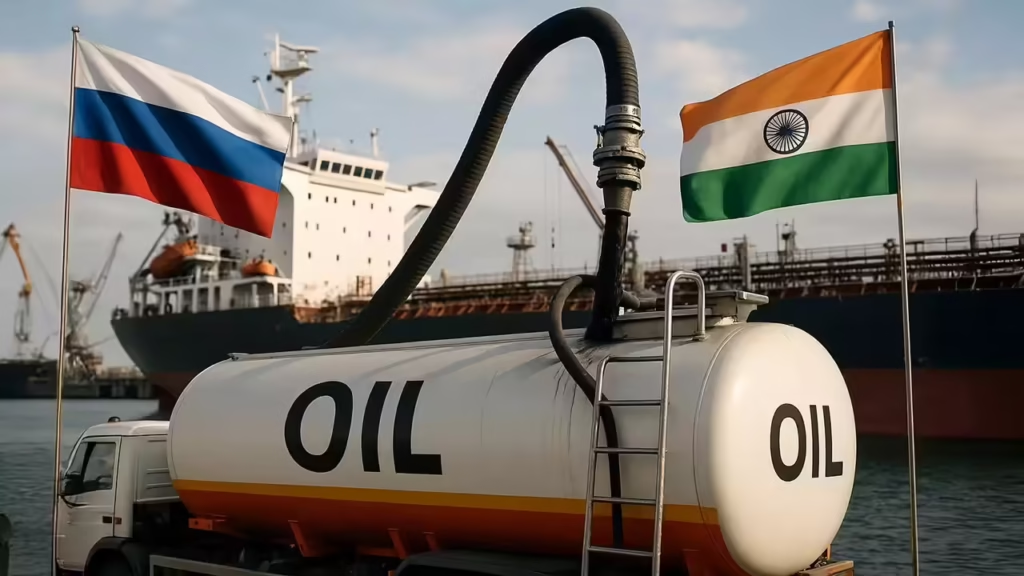
Oil : Russia will keep selling crude to India at competitive rates.
Gas : Discussions on LNG supply (nothing final yet).
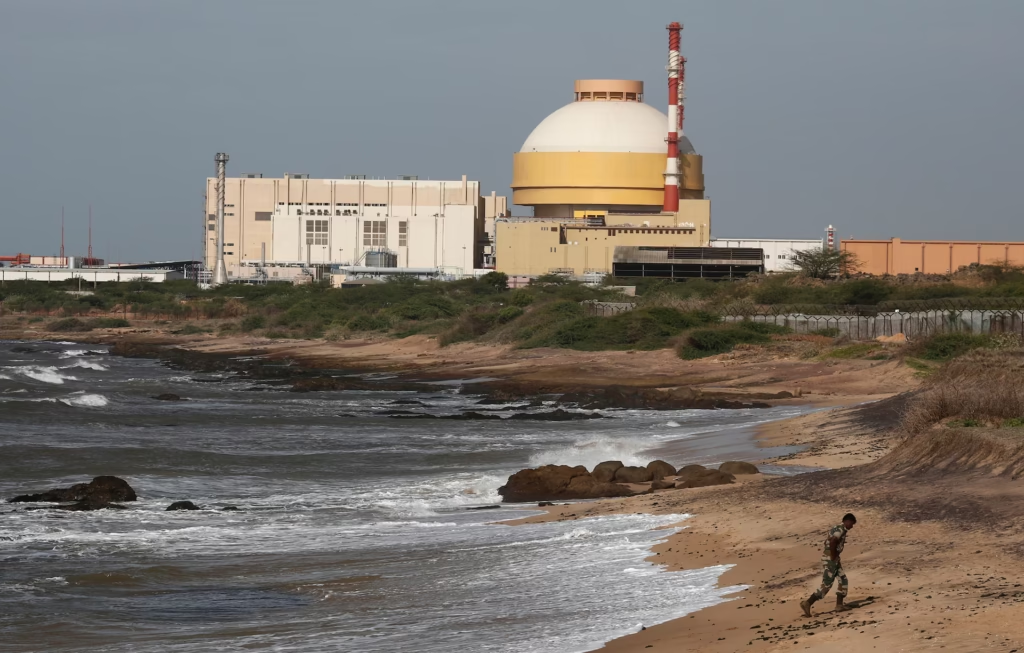
Nuclear energy : More work on Kudankulam + plans for new reactors.
India wants energy that’s:
cheap
stable
not controlled by any one group of countries
Russia wants long-term customers.
Easy trade: “We need money, you need energy.” Don’t overthink it.
Defence & Military-Technical Cooperation: What Happened vs What Didn’t
Everyone expected some huge defence announcement.
Didn’t happen.
Why?
Because India is trying to reduce defence dependence on Russia – and Russia is busy with its own war priorities.
But still:
They discussed upgrades for existing Russian equipment in India.
Talked about spare parts and joint production.
India did NOT sign any major new buying deals. Good – over-dependence is risky.
Defence cooperation continues, but the days of “India buys everything from Russia” are clearly ending.
Beyond Deals: Connectivity, Technology, Arctic & Far-East Cooperation
This part barely gets headlines, but it actually matters.
Plans to improve shipping routes via the Arctic (faster than current routes).
Cooperation in Russia’s Far East – mining, energy, labour projects.
Use of India-Iran-Russia transit corridors.
Discussions on high-tech cooperation (AI, cybersecurity, space), but nothing very detailed yet.
In summary, they are attempting to expand their collaboration beyond “oil + guns.”
Soft Power, People-to-People Ties, Labour Mobility
This is the quiet but important part.
India might send more skilled workers to Russia.
Talk on education exchanges.
Plans for more cultural programs.
Media collaboration (Russia wants more influence in India).
Not headline stuff, but it builds long-term influence and trust.
What It Means for India’s Strategic Autonomy & Global Positioning
Here’s the blunt truth:
India is balancing.
Not choosing sides.
Not falling for pressure.
US, Europe, Russia, Middle East – India wants good relations with all of them.
Putin’s visit strengthens India’s message to the world:
“We decide our foreign policy. Not you.”
It’s basically India saying,
“We’ll buy what we want, from whom we want, when we want.”
This is strategic autonomy in action.
Risks, Criticisms & What’s Missing From the Visit
Do you want to be honest? Here it is:
Risks:
Too much oil dependence on Russia could backfire.
Payment issues might keep causing trouble.
Defence supplies could slow down because Russia is stretched.
West may increase diplomatic pressure.
What was missing:
No big defence deals.
No breakthrough on payment systems.
No detailed plan on cutting India’s trade deficit.
No strong statement on Ukraine (obviously – both want to avoid drama).
Next Steps & What to Watch After Putin’s Visit
Here’s what actually matters going forward:
Will Russia offer long-term oil contracts?
Will India increase exports or keep the imbalance?
Will new nuclear projects move quickly or drag on?
Will defence cooperation stay stable during Russia’s war?
Will India maintain its balancing act with the West?
Watch these – they’ll decide the real impact of the visit.