Tsunami Japan Warning: Latest Updates
Following a powerful earthquake in the area, Japan issued a tsunami warning. Many news websites exaggerate this, but don’t misunderstand. A warning indicates that there may be waves and that people should remain vigilant, not that a massive wave is already crashing onto the shore.
Authorities have currently examined early reports, wave activity, and coastal areas. The good news is that authorities are still advising people to exercise caution even though the immediate threat has largely subsided. Japan has experienced some terrible tsunamis in the past, so they take this stuff seriously.
What Triggered the Tsunami Japan Warning?
A tsunami warning doesn’t pop out of nowhere. It started with a pretty strong earthquake – around 6.7 to 6.9 magnitude – hitting Japan’s northeastern region. When the ground shakes this hard under the ocean or near the coast, it can make the water rise and create waves that can travel fast.
Think of it like someone dropping a big rock in a bucket of water. The water splashes out. Same logic, just on a massive scale.
Earthquake Details (Location, Magnitude, Timing)
Here’s the quick breakdown:
Magnitude: Between 6.7 and 6.9 (depends on the measurement system)
Location: Northeastern Japan – areas like Fukushima, Miyagi, or nearby regions
Depth: Fairly shallow, which increases the chance of a tsunami
Timing: Hit late in the day, so people near the coast got alerts fast
It wasn’t the biggest earthquake Japan has seen, but it was strong enough to wake everyone up – literally.
Japan Meteorological Agency (JMA) Tsunami Alert Explained
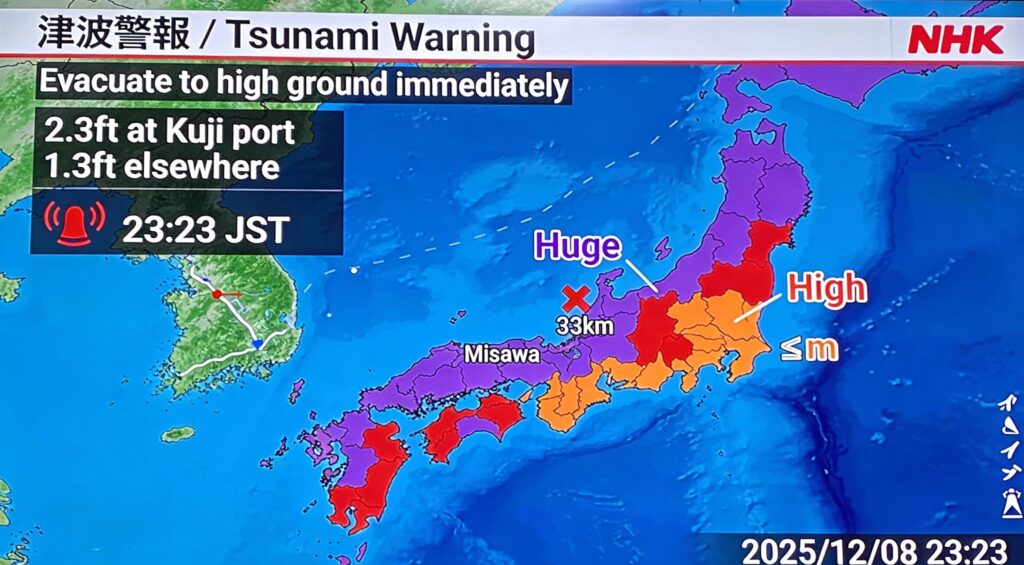
JMA is Japan’s official weather and disaster agency. These guys don’t mess around. When they issue a tsunami alert, it means they’ve detected unusual sea-level movements right after an earthquake.
They have super advanced systems that calculate:
wave height
possible coastline impact
speed of the wave
safety needs
If they say “move away from the shore,” they mean it.
Tsunami Warning vs Advisory: What It Means
Let’s keep this super simple:
| Type | Meaning | Risk Level |
|---|---|---|
| Tsunami Warning | Waves can hit any moment. Move to higher ground. | High |
| Tsunami Advisory | Waves might be small but still risky. Stay alert. | Moderate |
| Information Statement | “Chill, nothing dangerous for now.” | Low |
People often confuse warning and advisory. A warning is serious. An advisory is “don’t act stupid near the water.”
Areas Affected by the Japan Tsunami Warning
Some of the areas that were told to be careful include:
Fukushima
Miyagi
Iwate
Hokkaido (some parts)
Coastal towns along the Pacific side
These regions usually get alerts because they face the open ocean.
Evacuation Orders and Safety Measures
Japan has a solid evacuation system. When the warning came in, people were told to:
Move uphill
Stay away from beaches
Avoid rivers (tsunami waves can travel upstream)
Follow local police and sirens
Don’t return home until officials confirm safety
It’s basic but lifesaving. And yes, people in Japan actually follow rules – unlike how some people treat safety warnings like suggestions.
Impact on Communities and Infrastructure
So far, the impact seems mild. There were:
Some shaky buildings
Small waves along the coast
Train delays
Power cuts in a few places
Nothing crazy like 2011 levels. Mostly precaution and checking for damage.
Megaquake Advisory & Ongoing Risks
Japan is always monitoring “megaquake” possibilities – basically huge earthquakes that can cause massive tsunamis. This event wasn’t one of those, but it reminds everyone that the region is active and unpredictable.
If someone tells you earthquakes are over after one shake, they’re wrong – aftershocks and secondary quakes can hit anytime.
Historical Context: Past Japan Tsunamis
You already know the big one – 2011 Tohoku tsunami, which devastated several regions. Japan has had multiple tsunamis over the years because it sits on major fault lines.
Comparing this event to 2011 is unnecessary – 2011 was extreme. Today’s warning was more of a “stay careful” situation.
How to Prepare for a Tsunami in Japan
If you ever end up in Japan (or any coastal area), don’t act clueless during an alert. Do this instead:
Know the nearest evacuation route
Listen to official alerts, not rumors
Don’t go near beaches “just to see the waves”
Keep a small emergency kit
Charge your phone when alerts start
It’s basic survival sense.
FAQ's
Mostly no – it’s been lifted, but officials still tell people to stay aware.
A pretty strong earthquake near the coast.
Mainly northeastern coastal regions like Fukushima and Miyagi.
Yeah, generally safe – but follow official updates.
Yes. Aftershocks are normal.
Mostly small – under 1 meter.
The Japan Meteorological Agency (JMA).
No. It’s a “better safe than sorry” step.