World Health Organization: What It Is and Why It Matters
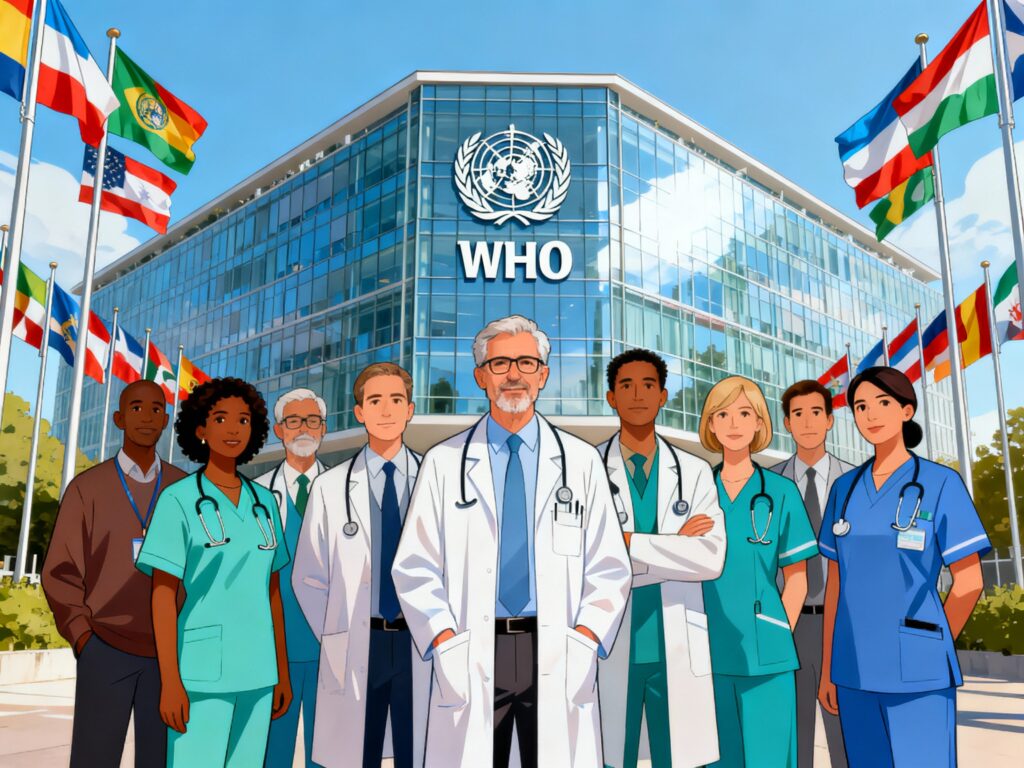
Consider the World Health Organization (WHO) to be the global health educator.
What is its job? Ensure everyone is safe and healthy, regardless of wealth or poverty, whether they reside in large cities or tiny villages.
WHO teaches nations how to build better hospitals, aids in the fight against disease, and even alerts the world when a new virus begins to spread. In essence, these individuals experience panic before the rest of us do.
A Quick History of WHO (From 1948 to Today)
In 1948, immediately following World War II, the world came to the realization that “we kind of need someone to watch over global health,” which led to the creation of WHO.
This is the condensed version:
WHO formally began in 1948.
- 1950s – Contributed to the fight against polio and malaria
- 1970s – A major victory: smallpox was eradicated
- 2000s – Worked on HIV/AIDS treatment and awareness
- 2020 – Gained prominence amid COVID-19
Today, it monitors illnesses, advises governments, and gets ready for emerging health risks.
WHO has essentially developed into the “global call center” for all matters pertaining to health.
What the World Health Organization Actually Does
Let’s be honest: WHO has a lot of work to do. Here are the key ones, though, with a brief explanation.
They Create Global Health Regulations
The health sector has regulations, just like your school.
WHO provides nations with information such as:
- which vaccines to administer,
- how to cure specific illnesses,
- which food safety regulations to adhere to.
- They Aid in the Battle Against Illness
WHO sends specialists, physicians, and guidelines to nations, regardless of the severity of the disease-from minor illnesses like the flu to major ones like Ebola.
They Enhance Health Systems and Hospitals
There aren’t enough hospitals, qualified nurses, or basic supplies in some nations.
WHO assists them in training and upgrading personnel.
They Handle International Emergencies
COVID-19? Zika? Bird flu?
In order to prevent nations from acting rashly, WHO coordinates responses.
They Collect Health Data
They are aware of:
- how many individuals are ill,
- which illnesses are spreading,
- which health issues are getting worse.
Governments are able to make better decisions as a result.
Major Wins of WHO (Actual Real-Life Successes)
Smallpox Eradication
Millions of people used to die from smallpox. WHO spearheaded a massive worldwide vaccination campaign that, by 1980, was completely eradicated.
The only illness that people have completely eradicated.
Polio Almost Gone
Thanks to WHO, polio exists in only a couple of places now.
Handling Global Outbreaks
SARS, Ebola, COVID-19 : WHO coordinated global responses, shared research, and alerted the world.
Child Vaccination
Millions of kids get vaccines today because WHO helped set up immunization programs.
How WHO Is Organized (Simple Version)
Consider WHO as a large educational system:
- Members (Countries): Students from more than 194 nations
- Similar to the student council, the World Health Assembly
- Executive Board: Teachers who assist with management
- Regional Offices: Asian, African, European, and so forth.
- Headquarters: Geneva, Switzerland
Because Africa’s health issues are similar to those of Europe, each region deals with its own health issues.
WHO’s Work in Different Parts of the World
Here’s the brief vibe:
- Africa: Improving hospitals, combating malaria
- Asia: Maternal health and vaccination
- Europe: Lifestyle diseases (smoking, obesity)
- Middle East: Medical assistance in areas of conflict
- Americas: Community health initiatives combined with disease outbreaks
Different locations, different issues WHO attempts to assist where assistance is required.
Criticisms & Challenges (Yes, WHO Gets Hate Too)
Let’s face it: Nobody is flawless.
People gripe about:
- Sometimes the response to outbreaks is slow.
- over-reliance on national funding
- political pressure from strong countries
- unclear instructions (particularly during COVID-19)
Alright, so 194 nations are constantly at odds with each other.
Nevertheless, the criticism is present and deserving of discussion.
How WHO Affects You Personally
WHO may seem like a far-off international organization, but it has a greater impact on your life than you realize:
- Your childhood immunizations? under the direction of WHO.
- Guidelines for food safety? WHO guidelines.
- Health precautions (such as smoking)? WHO studies.
- Alerts for outbreaks? WHO surveillance.
Without even realizing it, you have spent your entire life adhering to WHO guidelines.
How People and Organizations Can Work With WHO
To put it simply, anyone can utilize WHO resources:
- Students: Data, research papers
- Journalists: Statistics, reports
- Governments: Guidelines for health
- NGOs: Collaborations on health initiatives
- Researchers: Worldwide datasets
WHO offers open data resources such as:
- The Global Health Observatory
- Dashboards for immunization
- Maps for tracking diseases
It’s free and doesn’t require login access.